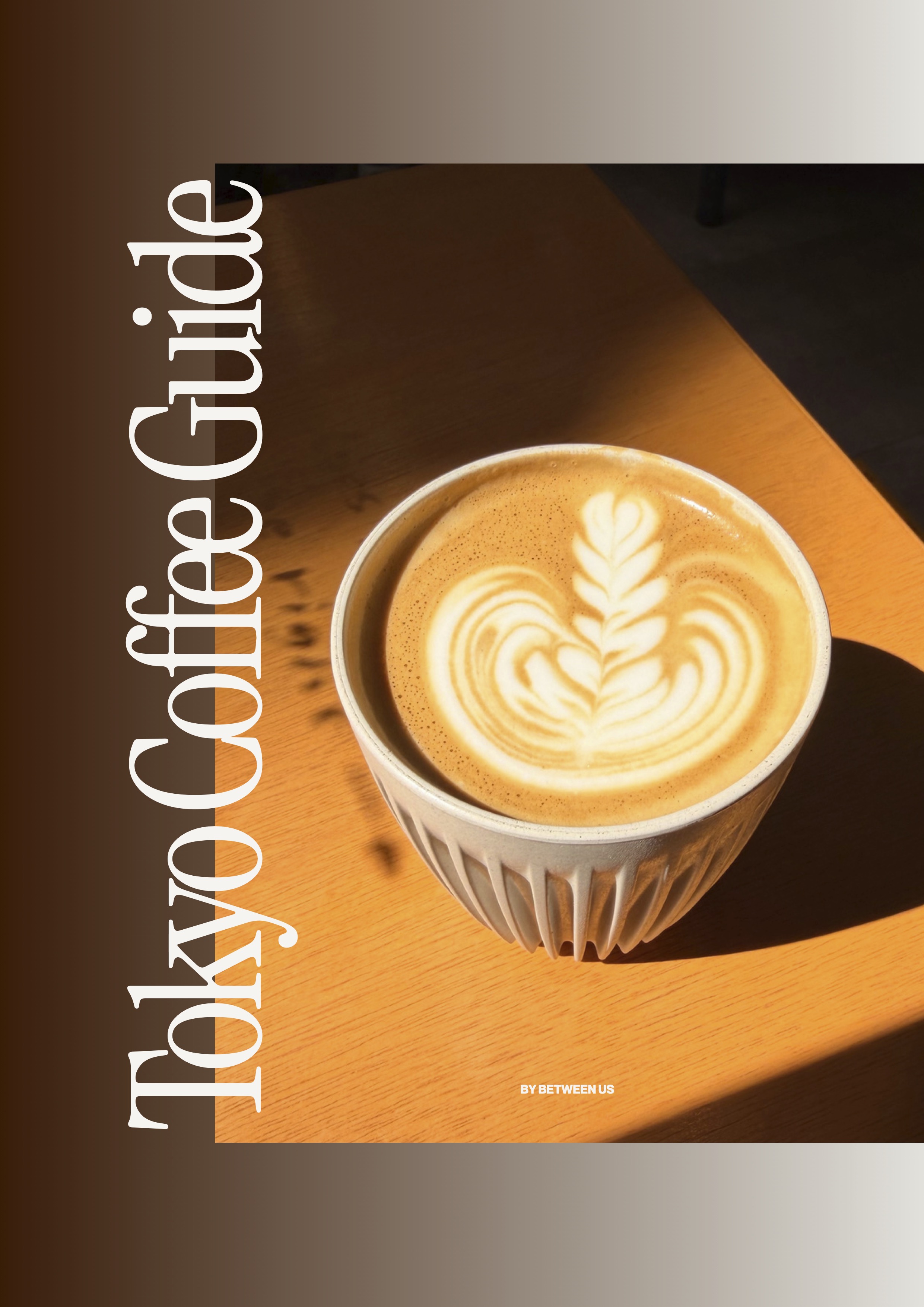
Tokyo
The best coffee in Tokyo isn't on a list.
Tokyo has more good coffee per square kilometre than almost anywhere. That's the problem: search "best coffee in Tokyo" and you'll get the same twelve photogenic counters, ranked by how well they photograph.
What follows is how we actually look for coffee here after five years of visiting — which neighbourhoods reward a walk, how to tell a kissaten from a specialty bar, and when to arrive so you get a seat.
Where to walk
Four neighbourhoods that reward the detour.
Shibuya & Tomigaya
Dense, modern, and quick to change. Walk west from the station and the noise drops within ten minutes — this is where most specialty counters sit.
Yanaka & Nezu
Low buildings, old wooden shopfronts, and the slowest pace in the city. Best on a weekday morning, when the coffee is poured for regulars.
Kuramae & Kiyosumi
Riverside workshops turned roasteries. Good for a long walk between two or three stops without ever queueing.
Shimokitazawa
Second-hand shops and small rooms with mismatched chairs. The kind of place you sit in longer than planned.
How to drink it
Four things worth knowing before you sit down.
01
Know which room you want
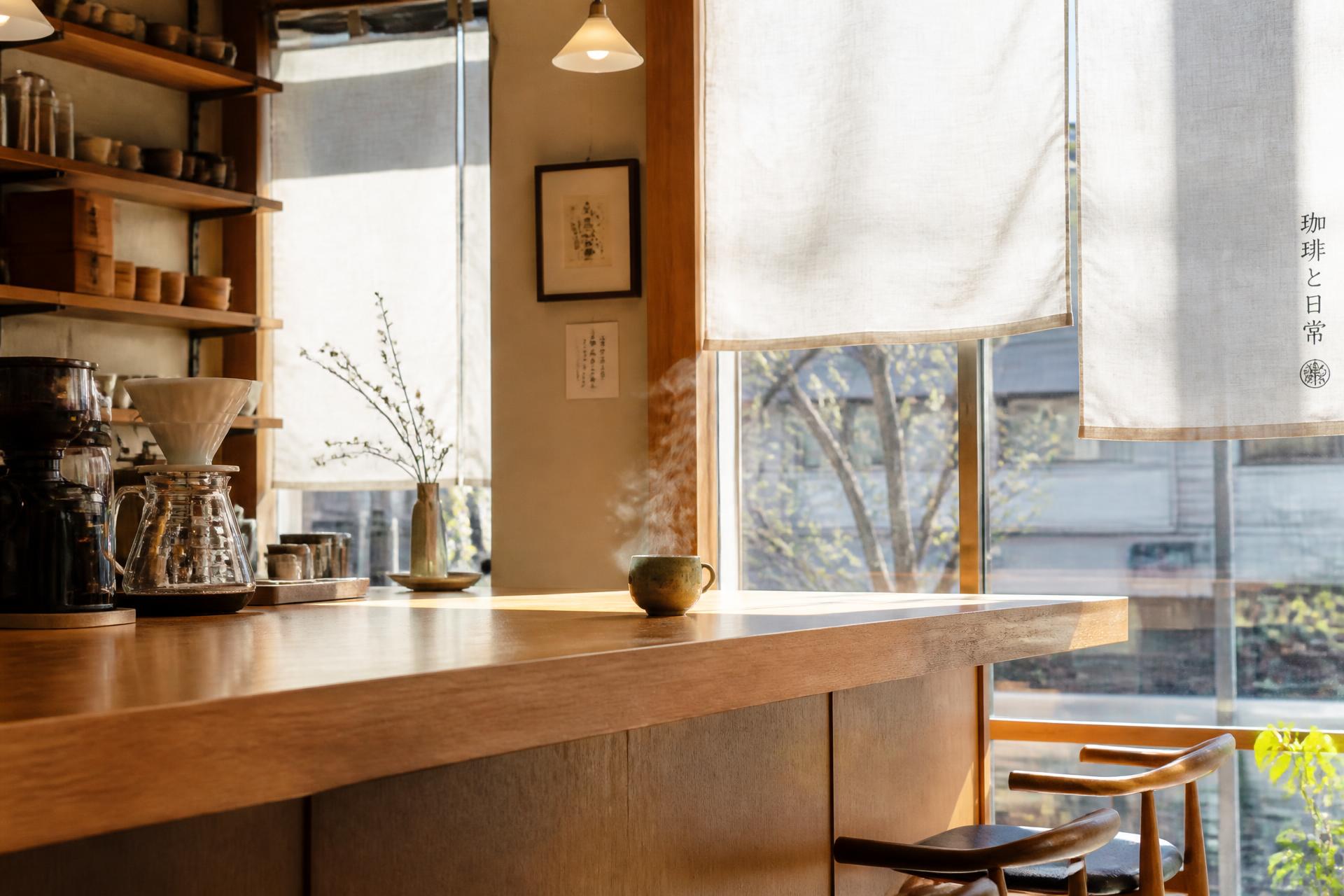
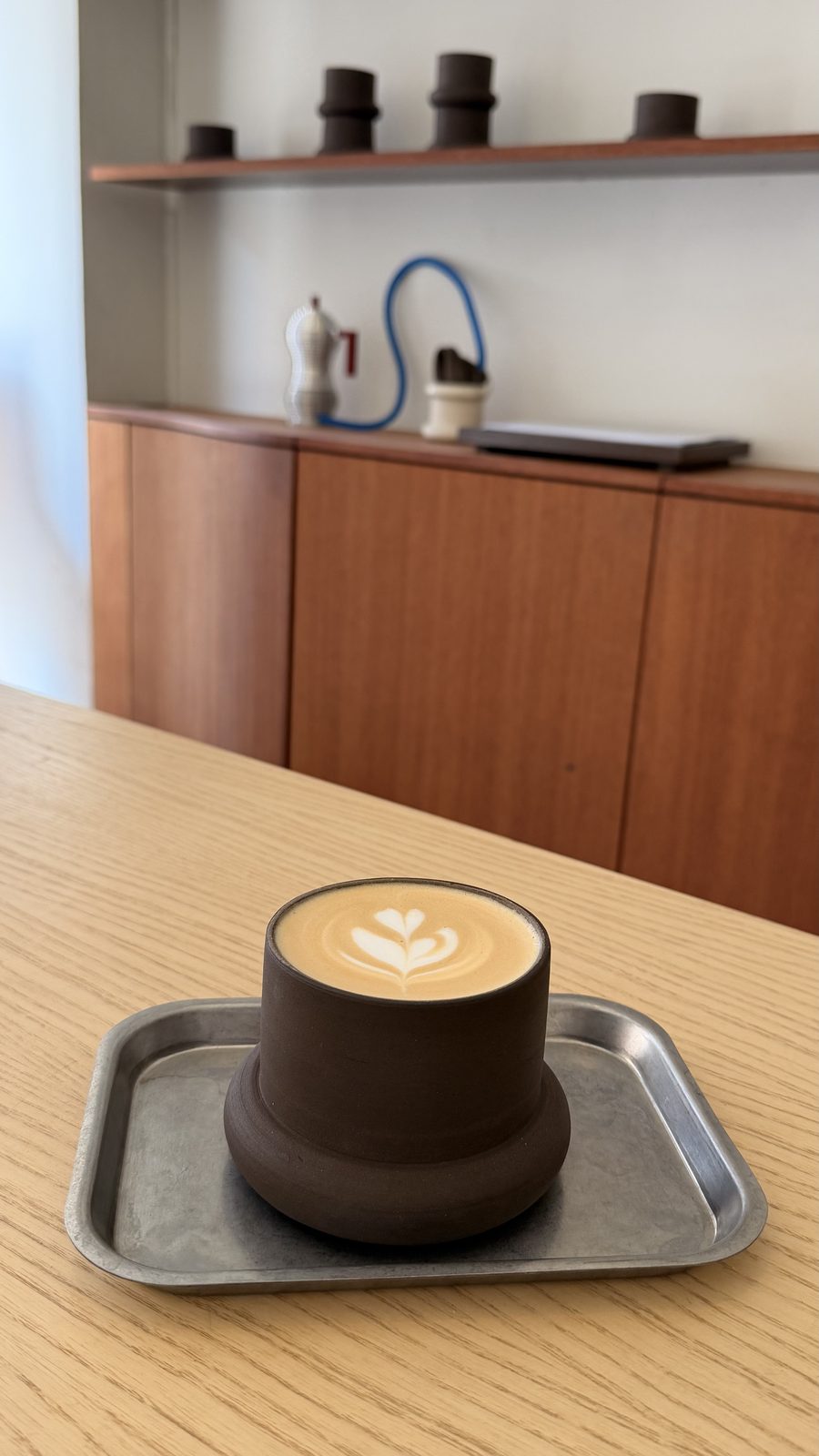
A kissaten is a Showa-era café: dark wood, siphon or nel-drip coffee, no rush. A third-wave counter is lighter roasts, single origins, and a barista happy to talk. Both are Tokyo. Decide before you walk.
02
Go early, or go late
Many of the best rooms are small — six to twelve seats. Before 10am or after 3pm you'll usually sit straight down. Weekends after noon are the only time you'll properly queue.
03
Order the house pour
If there's a blend on the board, order it. It's the roaster's own statement and the fastest way to understand a place. Ask for the single origin on the second cup.
04
Read the room on phones and photos
Some counters ask for no photography, some for no laptops. It's usually written by the door in Japanese and English. Quiet attention is the local default.
If you want the addresses
Coffee places in Tokyo, whispered to you.
Our digital guide collects the rooms behind this page: written by hand, mapped, and readable offline — with an interactive map you can open on the street. €20, yours to keep.